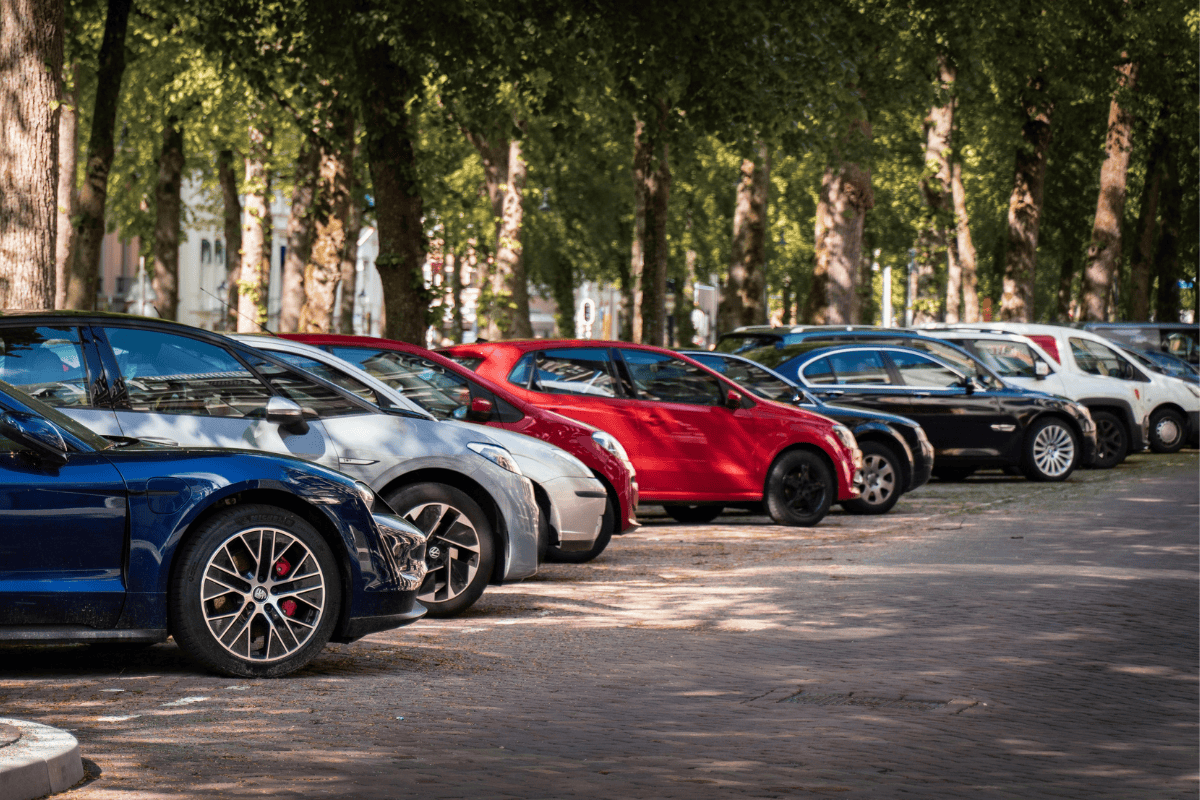
In Australia, the family home is usually our single biggest investment. Not far behind it sits the family car, or increasingly, cars – with SUV and dual-cab utes now dominating the market.
While vehicles are getting larger, Aussie garages are quietly shrinking.
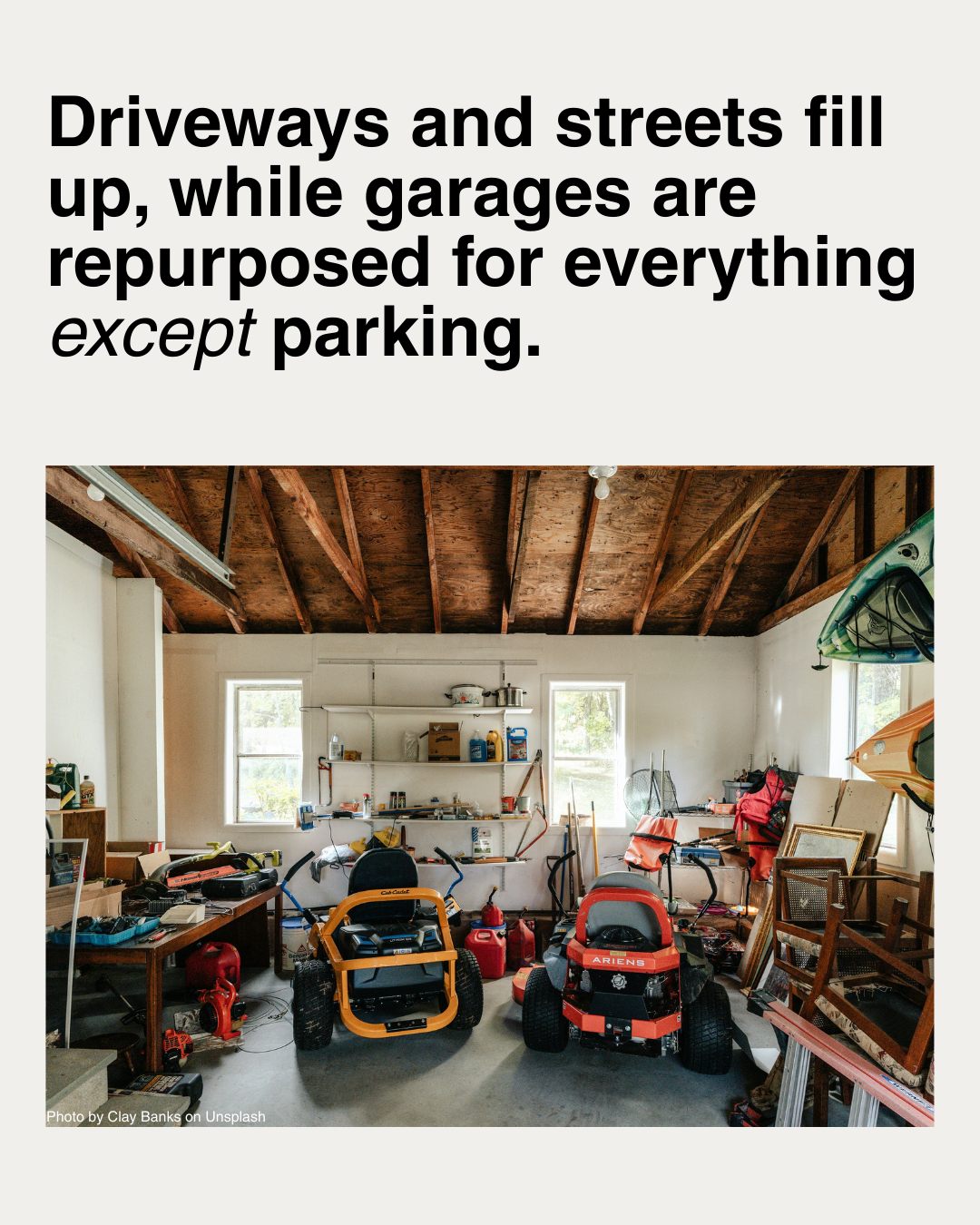
In many new housing developments, what is labelled as a “double garage” no longer comfortably fits two modern vehicles. In practice, one car can squeeze in, but in reality, you are more likely to see driveways and streets fill up, while garages are repurposed for everything except parking.
What is the modern garage problem?
Recent surveys across Australian suburbs show that more than half of homeowners rarely or never park a car in their garage. Instead, that area of the house has become an overflow storage zone – housing bikes, kayaks, gym equipment, seasonal items, boxes of “stuff we might need one day”, and basically everything else that doesn’t fit inside the home.
We aren’t alone in this issue. A well-known study by the University of California, Los Angeles, found that three out of four homeowners had so much stored in their garage that they couldn’t fit a car in there at all.
Take a walk through your own suburb in the early evening, and you will see it firsthand: cars lined along kerbs and driveways packed.
The hidden economics of garage storage.
There’s an assumption that using your garage for storage is “free”. After all, it’s already part of the house. But when you look more closely, it becomes one of the most expensive storage options available.
Considering the average cost of a double garage hits as high as $90,000, the humble garage is actually more of a premium piece of real estate. Despite this, people often use this space to store low-value, rarely accessed items, while assets worth tens of thousands of dollars are left on the street or driveway.
Police and insurers alike consistently warn that cars parked outside are at higher risk of theft, vandalism, damage from the elements, and accidental collisions. From a purely economic perspective, the value equation is flipped.
The question you should be asking is: Does it really make sense to use the most expensive storage space to protect my least valuable belongings?
Why this matters for self storage?
As cities around Australia (and globally) continue to densify with housing footprints tightening, the garage dilemma is becoming increasingly common, especially for newer suburbs and infill developments.
For self storage operators, this represents a distinct and growing customer segment:
- Homeowners who already have storage but are using it inefficiently
- Household with high-value vehicles and lifestyle assets
- Residents who value proximity, convenience, and security
This isn’t about shaming people for “having too much stuff”. It’s about helping them reclaim space they already own and using it for its intended purpose.
There are clear, practical ways self storage business can connect with these households:
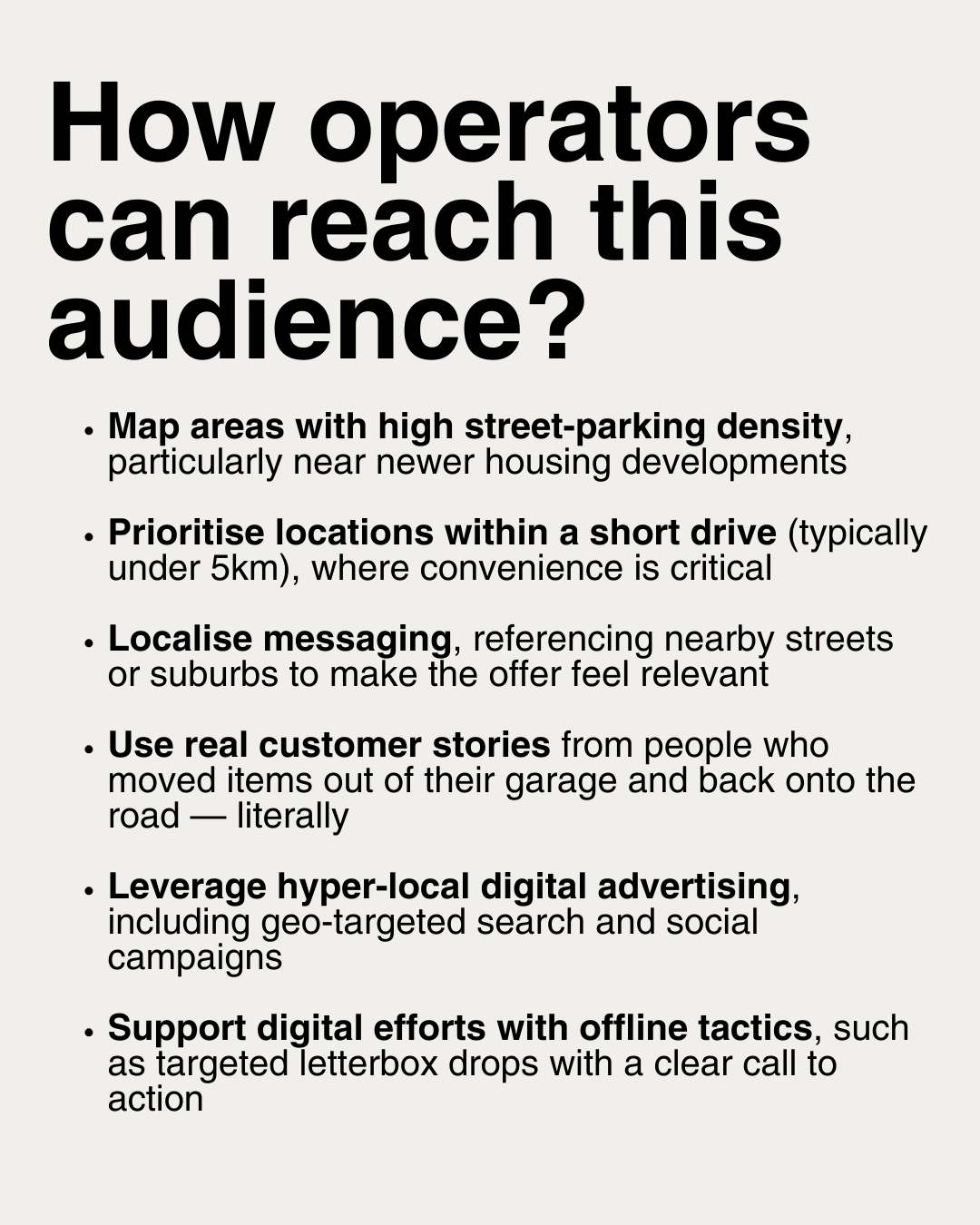
For many operators, these households are already driving past one or more of their facilities every day; they just haven’t connected the dots yet.
A missed opportunity hiding in plain sight.
As more self storage sites open near residential developments, the competition for traditional move-in drivers increases. Garage displacement offers a different angle. One that is deeply rooted in practicality, safety and value rather than tied to a short-term life event.
Helping customers move belongings out of the garage doesn’t just free up space. It helps them protect what is usually their second-largest investment and makes everyday life a little easier.
Busy operators and owners should consider engaging a professional marketing agency with extensive experience in self storage marketing to pursue this new channel of customer acquisition. The award-winning team at R6 Digital are ready to help your site attract new customers, so reach out today!
Sometimes, the simplest growth opportunities are the ones parked right outside.